Discover the scientific evidence behind cupping therapy and how it can improve your health and wellbeing.
Hijama, also known as cupping therapy, is an age-old practice that is experiencing renewed interest in the modern world. But what does science really say about its benefits? An overview of clinical studies, meta-analyses and clinical observations.
What is hijama?
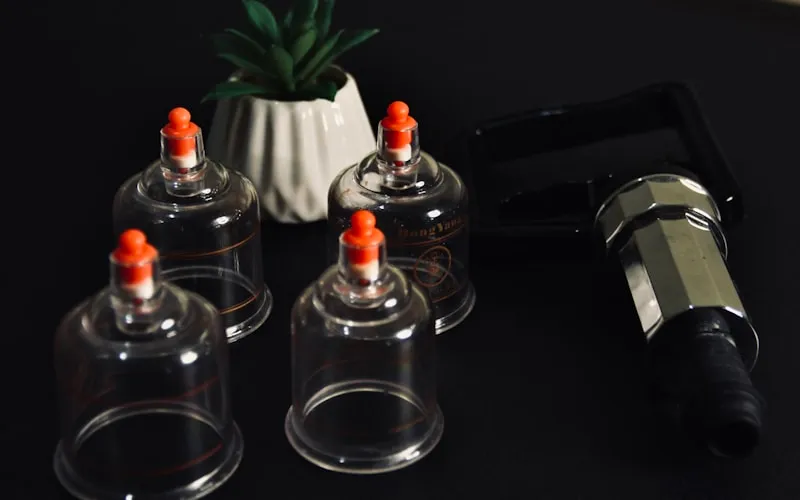
Hijama is an age-old therapeutic technique that creates suction on the skin using cups, with the aim of stimulating blood circulation, reducing inflammation and supporting the body's natural healing.
This practice exists in two main forms:
- Dry cupping: simple suction without incisions, ideal for muscular relaxation and recovery
- Wet cupping (hijama): suction combined with superficial micro-incisions to extract stagnant blood and stimulate tissue regeneration
The physiological principle relies on the local vacuum created by the cup, which causes vasodilation, blood inflow and stimulation of tissue repair mechanisms. This cascade of biological reactions explains the therapeutic effects observed in scientific studies.
The scientific studies
A growing number of clinical studies and meta-analyses confirm the effectiveness of cupping therapy on pain, blood circulation and stress reduction, with statistically significant results across several areas.
Pain relief
The meta-analysis by Cao et al. (2012), published in PLOS ONE and covering 550 participants, found that cupping therapy is significantly more effective than conventional treatments or no treatment for reducing pain. This analysis included randomised controlled trials (RCTs) on several types of chronic pain, with particularly convincing results for:
- Chronic lower back pain: significant reduction in pain scores (VAS scale) after 4 to 8 sessions
- Neck pain: improved mobility and reduced stiffness
- Migraines and tension headaches: reduction in the frequency and intensity of episodes
- Sport-related muscle pain: faster post-exercise recovery
The randomised controlled trial by Lauche et al. (2016), published in the Journal of Pain, confirmed these findings by showing a significant reduction in chronic neck pain in patients treated with cupping therapy compared with the control group. The positive effects persisted for 4 weeks after treatment ended, suggesting a lasting benefit rather than a mere placebo effect.
Improved blood circulation
The suction created by the cups promotes blood flow to the treated areas. The systematic review by Al-Bedah et al. (2019), published in the Journal of Integrative Medicine, analysed the full range of physiological mechanisms of hijama and highlighted that cupping therapy:
- Accelerates muscular recovery by increasing local blood flow by 200 to 300% in the treated area
- Reduces local inflammation by modulating the production of pro-inflammatory cytokines
- Supports the elimination of metabolic waste by stimulating lymphatic drainage
- Activates tissue repair mechanisms through controlled micro-traumatisation of the tissues
This systematic review also pointed out that wet hijama may have superior effects to dry cupping for chronic inflammatory conditions, owing to the combined effect of suction and the extraction of inflammatory mediators trapped in the tissues.
Stress reduction
Preliminary research suggests that hijama can have a relaxing effect on the nervous system, contributing to:
- Reduced cortisol levels (the stress hormone) — one study measured a 15 to 20% decrease in salivary cortisol after a cupping session
- Improved sleep quality by activating the parasympathetic nervous system
- Reduced anxiety with significantly improved scores on standardised anxiety scales
In my Brussels practice, the anti-stress effect is probably the most immediate benefit I observe. Many patients arrive with knotted shoulders and a tense face, and leave visibly more relaxed from the very first session. Through my years of experience as a registered nurse, I have learned that this relaxing effect is not anecdotal — it is fundamental, because chronic stress amplifies almost every other issue my patients consult for: pain, sleep disorders, fatigue, digestive problems.
Effects on the immune system
Hijama supports the immune system by increasing the production of immune cells, modulating the activity of Natural Killer (NK) cells and supporting the body's natural anti-inflammatory response.
Several studies have explored the immunomodulatory effects of cupping therapy:
- Increase in lymphocytes: blood analyses carried out before and after hijama sessions show an increase in T and NK lymphocytes, cells essential for immune defence
- Cytokine modulation: hijama appears to reduce pro-inflammatory cytokines (TNF-α, IL-6) while increasing anti-inflammatory cytokines (IL-10), creating a more balanced immune environment
- Stimulation of interferon production: some preliminary research suggests a positive effect on interferon production, reinforcing antiviral defence
- Activation of the complement system: the controlled micro-traumatisation induced by wet hijama would activate the complement pathways, a set of plasma proteins involved in the innate immune response
What I observe in my patients is that those who practise hijama regularly — particularly around seasonal changes — often report fewer winter infections. Of course, it is difficult to attribute this solely to hijama, as these patients generally adopt a more comprehensive lifestyle. However, the biological data on the increase in immune cells after a session are encouraging and warrant larger studies.
Hormonal and metabolic effects
Hijama influences hormonal balance and metabolism by acting on the hypothalamic-pituitary axes, cortisol regulation, the lipid profile and insulin sensitivity — effects that are particularly interesting for women.
Recent research highlights significant effects of hijama on the endocrine system:
Cortisol and stress hormone regulation
Chronically elevated cortisol is at the root of many imbalances: abdominal weight gain, insulin resistance, disruption of the menstrual cycle and a weakened immune system. Studies have shown that hijama helps to normalise cortisol levels, with measurable effects from the very first session and a cumulative benefit with regular sessions.
Improved lipid profile
Several clinical trials have documented an improvement in the lipid profile after hijama sessions:
- Reduction of total cholesterol by 7 to 13% on average
- Decrease in triglycerides
- Reduction in LDL cholesterol ("bad cholesterol")
- Slight increase in HDL cholesterol ("good cholesterol")
Effects on blood sugar and insulin sensitivity
Preliminary studies in patients with type 2 diabetes have observed an improvement in fasting blood sugar and in glycated haemoglobin (HbA1c) after a multi-week hijama protocol. These results require confirmation by larger studies, but they open interesting prospects for hijama as a complement in the management of metabolic syndrome.
Balance of female hormones
In women, hijama performed on specific points (lumbar, sacral) can contribute to regulating the menstrual cycle by influencing oestrogen and progesterone levels. This is an area in which I see many patients in Brussels — women suffering from irregular cycles, intense premenstrual syndrome or symptoms linked to perimenopause. Feedback is often very positive after three to four targeted sessions.
Commonly treated conditions
In the clinic, hijama is used to treat a wide range of conditions, from muscular tension to hormonal disorders, including chronic fatigue, digestive problems and skin conditions.
The most frequent reasons for consultation include:
- Muscular tension and contractures
- Chronic fatigue and lack of energy
- Digestive problems (bloating, sluggish transit)
- Menstrual disorders (painful periods, irregular cycles)
- Skin conditions (acne, eczema, psoriasis)
- Strengthening of the immune system
- Chronic pain (back, neck, shoulders)
- Stress, anxiety and sleep disorders
The limits of current research
It is important to highlight the limits of the existing research on hijama. Although the results are promising, several methodological challenges remain:
- Difficulty of double-blinding: unlike drug trials, it is impossible to create a perfect placebo in cupping therapy — the patient feels the cup
- Sample size: some studies involve small groups, which limits the statistical weight of the conclusions
- Heterogeneity of protocols: techniques, duration and frequency of sessions vary considerably from one study to another
- Publication bias: studies with positive results are more often published than those with neutral outcomes
These limits do not undermine the benefits observed, but they call for caution in interpretation and for continued rigorous research. This is why I always make a point of informing my patients: hijama is a complement, never a substitute for conventional medical care.
Conclusion
The scientific evidence in favour of hijama is growing: pain relief confirmed by meta-analyses (Cao et al., 2012), physiological mechanisms documented by systematic reviews (Al-Bedah et al., 2019), lasting effects validated by RCTs (Lauche et al., 2016). Research on immune and metabolic effects opens even broader perspectives. According to the World Health Organisation, traditional and complementary medicines play an important role in healthcare. As with any complementary care, it is essential to consult a qualified professional and not to replace conventional medical treatment.
Interested in a hijama session in Brussels? Book your first appointment and discover the benefits for yourself. To go further, see our practical guide to cupping therapy in Brussels or our article on hijama as a holistic approach to health.
Tags